
COVID-19 aka SARS-CoV2 aka Coronavirus
While COVID-19 sounds like a bad remake of the 1980 Steely Dan ear worm, “Hey Nineteen”, it is a serious illness that has and will continue to impact California employers over the next several months.
What is COVID-19?
According to the World Health Organization, COVID-19 is a member of the coronavirus family, several of which cause respiratory infections ranging from the common cold to more severe diseases such as Middle East Respiratory Syndrome (MERS) and Severe Acute Respiratory Syndrome (SARS). COVID-19 also known as SARS-CoV2 is the most recently discovered coronavirus. It is believed that COVID-19 is a cross-over from bats to humans via an infected pangolin (a cross between an anteater and an armadillo) in the Huanan Seafood Wholesale Market, a “wet market” in Wuhan, China. A wet market sells fresh meat, fish, produce and other perishable goods. Pangolins are used in traditional Chinese medicine.
COVID-19 is a “new” virus to humans, having cross-over from a pangolin in late 2019, and having been spread worldwide due to the annual Lunar (aka Chinese) New Year. In China, millions of people travel to the countryside and back to celebrate the Lunar New Year with their families. Unfortunately, this year some carried the COVID-19 virus with them.
As COVID-19 is new to humans, we don’t know as much about it as we would like. COVID-19: (a) is “new,” and few have immunity, (b) spreads like the common cold (easily), and (c) it has a mortality rate lower than influenza, but far greater than the common cold.
Symptoms:
COVID-19 causes fever, tiredness, and dry cough. Symptoms may also include aches and pains, nasal congestion, runny nose, sore throat or diarrhea. Symptoms are usually mild and begin gradually. Some people become infected but don’t develop symptoms and about eighty percent (80%) of people recover with no special treatment. However, one (1) out of six (6) people who get COVID-19 become seriously ill, and have difficulty breathing. Symptoms can progress from moderate to severe quickly, often in less than 24-hours.
The elderly, those with underlying medical conditions such as high blood pressure, heart problems or diabetes, are more likely to suffer moderate to serious symptoms.
People with fever, cough and have difficulty breathing should seek medical attention.
Incubation Period:
The incubation period (the time between exposure and showing symptoms) is believed to be between one (1) to fourteen (14) days. This means you can be exposed, expose others, and finally show symptoms after unknowingly exposing others.
A Pandemic?
As of the time of this writing, the COVID-19 isn’t a pandemic. A pandemic is the outbreak of a disease over a wide geographic area which affects an exceptionally high proportion of the population. There are 105,000 reported cases of COVID-19 worldwide with over 500 cases in the US. The State of California has declared a COVID-19 emergency, with over 50 confirmed cases in twelve (12) counties. After a faculty member tested positive, Sandford University cancelled in-person classes starting on March 9th. Columbia, Barnard, Rice and the University of Washington have also imposed similar restrictions after a positive test was discovered in each their communities.
Testing for COVID-19 has, however, been limited to those (a) showing symptoms (discussed below), (b) and have traveled to China or (c) have been directly exposed to people traveling to China, or (d) to those who have been in close proximity to people who had recently traveled to China.
As testing expands and the number of people tested increases, we should see a significant rise in confirmed cases. This should happen before the end of March.
What Can & Should Be Done:
According to the World Health Organization, everyone can reduce the chances of being infected (or spreading) COVID-19 by taking simple precautions:
- Exercise good respiratory hygiene. Cover your mouth and nose with your bent elbow or tissue when you cough or sneeze. Dispose of the used tissue immediately.
When you cough or sneeze, you spray small liquid droplets from your nose and mouth which may contain virus’. Covering when you cough and sneeze helps limit the spray, and with it the chance of infecting others. If you must go out in public and are sick, wear a mask.
- Keep you distance. Maintain at least three (3) feet distance between yourself and anyone coughing or sneezing.
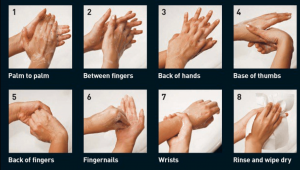
- Regularly and thoroughly clean your hands using an alcohol-based hand rub, or wash them with soap and water.* Avoid touching your eyes, nose and mouth.
- Stay home if you feel unwell. If you have a fever, cough and difficulty breathing, seek medical attention and call in advance.
- Avoid traveling to places known to have travel restrictions.
What Else Can Employer’s Do?
- Provide safety training in items one (1) to five (5).
- Reduce the number of in-person meetings, both inside and outside of your business. Wherever possible, choose teleconferences or video conferences.
- Encourage and/or require employees who show cold or flu like symptoms to go home, take a sick day, see a doctor, and rest.
- Consider increasing the number of paid sick days for employees who test positive for COVID-19, and / or permit quarantined employees to telecommute.
- Where possible, allow employees who are caregivers to telecommute.
- To avoid exposure at a doctor’s office, and so long as they are asymptomatic, on a case by case basis consider allowing employees to return to work without a doctor’s note should they take over three (3) consecutive sick days.
* How to properly wash your hands (it should take at least 30-seconds):
The materials contained herein are for information purposes only and not for the purpose of providing legal advice. For advice about a particular problem or situation, please contact an attorney.